Call Us
From Apple Orchards to Eco-Friendly Solutions. Let’s Talk 

Walk into any orchard or kitchen garden in Himachal and you’ll hear the same concern: “The soil isn’t what it used to be.”
Crops need more fertilizer. Plants dry faster. Water doesn’t stay in the soil like before. And despite using more chemicals every season, yields don’t always improve. This isn’t coincidence. It’s a quiet sign that soil is getting tired. And the solution is not more chemicals. It’s something much simpler, and much older: organic mulch.
Chemical fertilizers work fast. That’s why farmers use them. They push quick growth. But they don’t actually heal the soil. Over time, they:
So farmers need more fertilizer each year to get the same results. Soil becomes weaker, not stronger. It’s like giving energy drinks to someone who actually needs good food.
Organic mulch doesn’t rush the soil. It repairs it.
When you spread mulch around plants, it forms a natural blanket. It:
Instead of forcing plants to grow, mulch creates conditions where plants grow naturally and stronger. The soil becomes alive again.
Mulched soil stays moist longer. Unmulched soil dries quickly.
In hills where water is precious, this matters more than people realize. Mulch can reduce watering by almost half in many gardens and orchards. Plants stop stressing. Roots grow deeper. Fruits become better in size and taste. This isn’t theory. It’s visible in every mulched orchard.
Chemical fertilizers give results only while you use them. Mulch improves soil even after you stop.
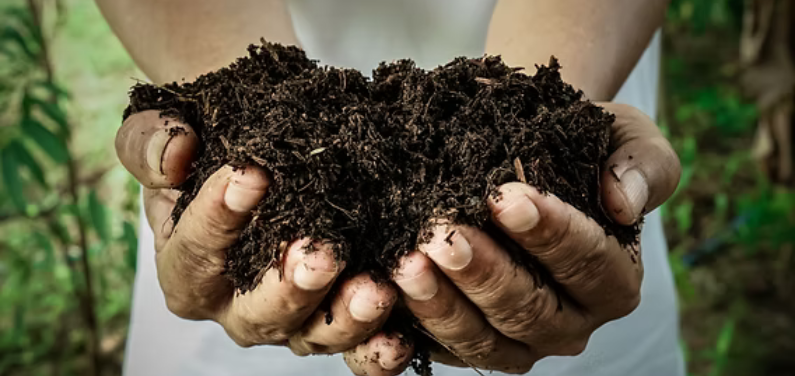
Season by season, mulched soil becomes softer, richer, darker and easier to work with. Earthworms return. Microbes increase. Roots spread freely. Plants resist disease better.
You don’t fight the soil anymore. You work with it.
That means fewer inputs and lower costs over time. And your soil keeps getting better, not worse.
Chemical fertilizers push plants.
Organic mulch builds soil.
One is temporary.
The other is permanent.
And in the hills, where land is life, choosing mulch isn’t just better farming.
It’s better thinking.