Call Us
From Apple Orchards to Eco-Friendly Solutions. Let’s Talk 

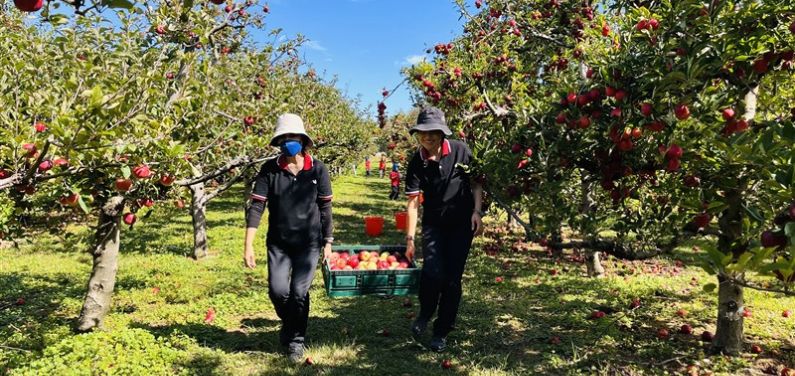
In the apple villages of Himachal, winter has always carried the smell of smoke. Not from fireplaces, but from orchards.
After the pruning season, dry apple branches would pile up in every field. There was no buyer for them, no storage space, and no real solution. So farmers did what felt practical: they burned them. In minutes, the fields were clean. But the smoke stayed for weeks.
What most people didn’t see was what was being burned.
And today, that economy is finally coming alive.
Every apple tree sheds branches every year. Across Himachal, Kashmir and Uttarakhand, this adds up to thousands of tonnes of dry wood every winter. For decades, this biomass had no official market. It costs money to clear. It polluted the air. It added no value. So it stayed invisible.
What if this “waste” could actually be used?
That question changed everything.
Instead of burning orchard waste, systems were created to collect it. That dry apple wood started moving, not into fire pits, but into processing units. There, it began its second life.
Today, apple orchard waste becomes:
What was once a liability is now a product line. And with that, a new supply chain was born.
This shift created something completely new for orchard owners: income from waste. Earlier, pruning waste was a cost. Now, it is a sale.
Farmers can sell branches instead of burning them. That money may not make headlines, but it pays winter expenses, school fees, and daily household needs. It also gives farmers something even more important, dignity in being part of a green economy.
They are no longer contributors to pollution. They are contributors to solutions.
Unlike many sustainability models that depend on imported technology or centralized factories, this green economy stays local.
It is circular. It is practical. And it is growing quietly across Himachal.
So this isn’t just about being green. It is about being smarter, cheaper, and cleaner.
That is why hotels, factories, nurseries, and households are switching. Because sustainability now makes economic sense.
The green economy of Himachal isn’t coming from distant policies or big promises. It is coming from apple branches lying in the village fields.
Sometimes, the future doesn’t arrive loudly.
It grows quietly, one branch at a time.